

Our Expertise
Intracytoplasmic Sperm Injection (ICSI)
Best ICSI treatment hospital in Mumbai
As the premier ICSI (Intracytoplasmic Sperm Injection) and IVF (In Vitro Fertilization) hospital in Mumbai, Jaslok Hospital is a well-known brand in the medical community and provides top-notch reproductive treatments. For couples dealing with infertility issues, Jaslok Hospital provides a ray of hope thanks to its decades of experience, state-of-the-art equipment, and caring staff.
The team of highly qualified and experienced embryologists, fertility doctors, and support personnel at Jaslok Hospital is impressive. Their knowledge guarantees each patient receives individualized treatment and the finest results. With state-of-the-art IVF technology, sophisticated embryology labs, and state-of-the-art diagnostic equipment, Jaslok Hospital offers a setting that is favourable to successful outcomes.
What Is Intracytoplasmic Sperm Injection (ICSI)?
One infertility treatment is intracytoplasmic sperm injection (ICSI). In a lab, live sperm are injected into an individual's eggs. An embryo (fertilized egg) may be produced by this process. One type of in vitro fertilization (IVF) is ICSI. ICSI is most frequently used by medical professionals when a person's ability to conceive is impacted by male infertility.
The term "intracytoplasmic" describes a sperm injection that occurs inside the cytoplasm of an egg. This is the gel-like material composed of salt, water, and other molecules that sits in the middle of an egg.
How Is ICSI Different From IVF?
One kind of IVF is ICSI. In a standard IVF procedure, an egg is placed on a lab plate with thousands of sperm next to it. It is up to chance whether one of the sperm will go inside the egg and fertilize it. Conception, also known as fertilization, does not take place if none of the sperm fertilize the egg.
The fertilized egg (embryo) is implanted into your uterus by your healthcare practitioner in both ICSI and conventional IVF. If the embryo adheres to your uterine lining, pregnancy results.
What Does The ICSI Process Look Like?
ICSI is intended to increase the likelihood of fertilization in situations where conventional IVF might not be effective. One swimming sperm is chosen for insertion into a single mature egg throughout the procedure. After being extracted, each mature oocyte (egg) is injected, and 16–18 hours later, its fertility is evaluated.
1. Ovarian Stimulation
Ovarian stimulation is the initial stage of an ICSI IVF cycle. Starting on Day 2 or Day 3 of your menstrual cycle, you will self-administer a series of daily injections of follicle stimulating hormone (FSH) at home. This drug stimulates the ovaries to promote the development of several egg-containing follicles.
2. Control and Monitoring
During the stimulation phase, your fertility specialist will use blood tests and/or ultrasounds to closely examine your ovarian response. This is crucial because drugs can be changed to regulate the quantity and size of follicles.
3. Egg Release
An injection of Human Chorionic Gonadotrophin (hCG) is used to help the egg reach its final maturity and separate from the follicular wall so that it can be collected. This is frequently called "the trigger injection." 4. Egg Retrieval -Under ultrasound guidance, the egg retrieval is carried out 35–38 hours following "the trigger injection" while you are under mild sedation. The fact that not every follicle will produce an egg and that not every egg will fertilize should not be overlooked.
5. Insemination
The insemination procedure is the primary distinction between ICSI and IVF. In IVF, many sperm are introduced to the eggs and allowed to fertilize naturally without the assistance of an embryologist, while in ICSI, a single sperm is directly inserted into a mature egg by a qualified embryologist.
A chosen sperm is injected into each mature egg on the day of egg harvest after the semen sample has been concentrated. The sperm is selected based on its normal morphology and ability to adhere to the media, which indicates improved DNA integrity for a more successful embryonic development. Evaluation of fertilization occurs 16–18 hours after injection.
6. Fertilisation
Sixteen to eighteen hours after insemination, the fertilized eggs are checked in an incubator. The embryologists will provide you with an update at this time. After fertilization, the embryos are cultured for five days.
It is crucial to remember that not all eggs will fertilize, and not all fertilized eggs will develop into embryos, even if every technique is designed to give the best chance of fertilization and optimal embryo development.
7. Embryo Transfer
The embryologists evaluate the quality and development of the embryos five days after the egg is retrieved. Using a tiny plastic tube called a transfer catheter, the best embryo is chosen to be transferred into the uterus. Typically, only one embryo is moved. Before the transfer occurs, you must negotiate with your clinician if more than one embryo will be transplanted. The process of embryo transfer is really rapid, and there shouldn't be much discomfort.
8. Vitrification
Any leftover embryos that satisfy the quality and development standards will be frozen. After then, these frozen embryos are kept in storage until they are needed for a later transfer. Pregnancy rates are similar to those of fresh embryo transfers, and the great majority of frozen embryos survive the freezing process.
9. Pregnancy Test
The luteal phase, which lasts for two weeks between egg collection and the pregnancy test, is the last stage of ICSI IVF. For many, this is the most trying period of their lives. Although this phase of the treatment cycle is joyful and hopeful, it can also be emotionally packed with anxiety and expectation. As you await your pregnancy blood test, you will be advised to remain busy, eat healthily, drink plenty of water, and limit your activities for 24 hours following the embryo transfer.
Who Needs ICSI?
Male infertility sufferers benefit most from ICSI. ICSI may be suggested by your healthcare professional if someone has:
- The inability to ejaculate is known as anejaculation.
- Their male reproductive system is blocked.
- Low number of sperm.
- Low-quality sperm.
- Semen flows backward into their bladder during retrograde ejaculation.
ICSI may also be required if:
- Embryos have not been produced by conventional IVF.
- The egg supplier is over 35 years old.
- You are attempting to conceive using cryopreservation, which involves using previously frozen eggs or sperm.
How Successful Is Intracytoplasmic Sperm Injection?
ICSI is used in about 6 out of 10 IVF treatments. ICSI and conventional IVF offer the same chances of a successful pregnancy. Fertilization is thought to occur in between 50% and 80% of ICSI efforts.
Is There Anyone ICSI Isn’t Right For?
ICSI is unlikely to be helpful if you have already had therapy and the sperm and egg have experienced problems fertilizing due to low-quality or immature eggs.
How Successful Is One Cycle Of ICSI?
The process of ICSI itself is highly effective in facilitating fertilization between the sperm and the egg. A successful pregnancy is still influenced by a number of other factors, including as the woman's age and whether or not she has any reproductive issues, just like with IVF. ICSI and IVF typically have nearly equal success rates.
Benefits Of ICSI (Intracytoplasmic Sperm Injection) Treatment
When combined with in vitro fertilization (IVF), intracytoplasmic sperm injection, or ICSI, is a very sophisticated reproductive procedure. It increases the likelihood of successful fertilization by directly injecting one sperm into an egg. The following are the main advantages of ICSI Treatment:
1. Overcomes Severe Male Infertility
2. Improves Fertilization Rates
3. Useful in Previous IVF Failures
4. Enables Use of Frozen or Donor Sperm
5. Addresses Unexplained Infertility
6. Helps in Genetic Testing
7. Fertility Preservation
8. Higher Chances of Fertilization in Difficult Cases
9. Minimizes the Risk of Fertilization Failure
10. Enhances the Chance of Parenthood for All Couple

What Differentiates Us
Why Choose Jaslok Hospital For ICSI/IVF?
Jaslok Hospital's rigorous procedures, state-of-the-art methods, and patient-centred philosophy enable it to continuously achieve high success rates.
Patients at Jaslok receive all-encompassing care, emotional support, and counselling to help them confidently and peacefully traverse the fertility process.
ICSI and IVF treatment packages at Jaslok Hospital are reasonably priced without sacrificing effectiveness or quality.
Thousands of couples have realised their dream of parenthood thanks to Jaslok Hospital. Throughout their course of treatment, patients commend the staff for their expertise, compassion, and steadfast support.
Jaslok Hospital is the greatest option if you're looking for the best ICSI or IVF treatment in Mumbai. Jaslok continues to change lives and make numerous families happy with its unparalleled experience, cutting-edge technology, and dedication to quality.
To begin your adventure as a parent, get in touch with Jaslok Hospital right now!
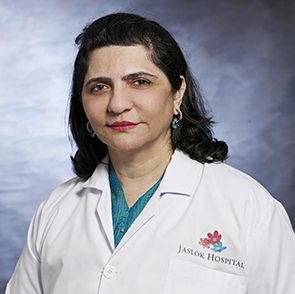
About Dr. Firuza Parikh
- Dr. Firuza Parikh is the Director of Jaslok-FertilTree International Fertility Centre at the Department of Assisted Reproduction and Genetics at Jaslok Hospital & Research Centre, Mumbai, India.
- She is considered number 1 in her field and her Clinic is rated as number 1 and best clinic in India. She is sought out for 2nd & 3rd opinions in difficult cases.
- Dr. Firuza has received many gold medals and 1st ranks in her career.
- She has specialization in In-Vitro Fertilization (IVF), Intracytoplasmic Sperm Injection (ICSI), IMSI, Egg & Embryo Freezing, Sperm and Testicular Sperm Freezing, Donor Eggs, Surrogacy, Male Factor Infertility.
- Dr. Parikh has successfully treated women with Repeated Miscarriages, Repeated Implantation Failure, Autoimmune conditions. She has special expertise in male factor infertility.
- Her pioneering treatment with ovarian instillation of Platelet Rich Plasma (PRP) has been used successfully in young women with low AMH.
Jaslok Hospital: The Best Hospital For ICSI Treatment In Mumbai
Jaslok Hospital is ranked as the best hospital for ICSI (Intracytoplasmic Sperm Injection) treatment in Mumbai. Jaslok Hospital is the best option for couples looking for efficient treatments for male and female infertility because of its impressive track record, cutting-edge equipment, and caring staff of specialists.
Jaslok is an expert in handling complicated cases of infertility, including:
- Severe infertility caused by male factors (poor motility or sperm count)
- Recurring failures with IVF
- Absence of sperm in semen, or azoospermia
- Unaccounted-for infertility
Fertility treatment at Jaslok involves more than simply medical procedures. To assist patients in navigating their path with ease and confidence, the hospital offers emotional support and counselling
Key Technologies
- Cytogenetic tests technologies, such as Karyotyping and FISH (fluorescence in situ hybridization)
- Molecular Genetic tests technology like PCR (Polymerase Chain Reaction)
- In vitro fertilisation (IVF) technology
- Intracytoplasmic sperm injection (ICSI)
- Advanced techniques for embryo culture
- Preimplantation genetic testing (PGT) techniques, including next-generation sequencing (NGS) and polymerase chain reaction (PCR)
- Cryopreservation technique
- Percutaneous Epididymal Sperm Aspiration (PESA), Testicular Sperm Aspiration (TESA) and Testicular Sperm Extraction (TESE) technology
- Laser technology for Assisted Hatching (LAH)
Key Procedures
Our Experts
Jaslok Hospital boasts over 300 eminent physicians, many of whom are trailblazers in their specialized domains. Moreover, they have garnered a reputation for devising groundbreaking and inventive clinical protocols.
Find a Doctor/Specialist