

Page Under Maintenance
This page is currently under maintenance.
Please communicate at the hospital help desk for assistance.
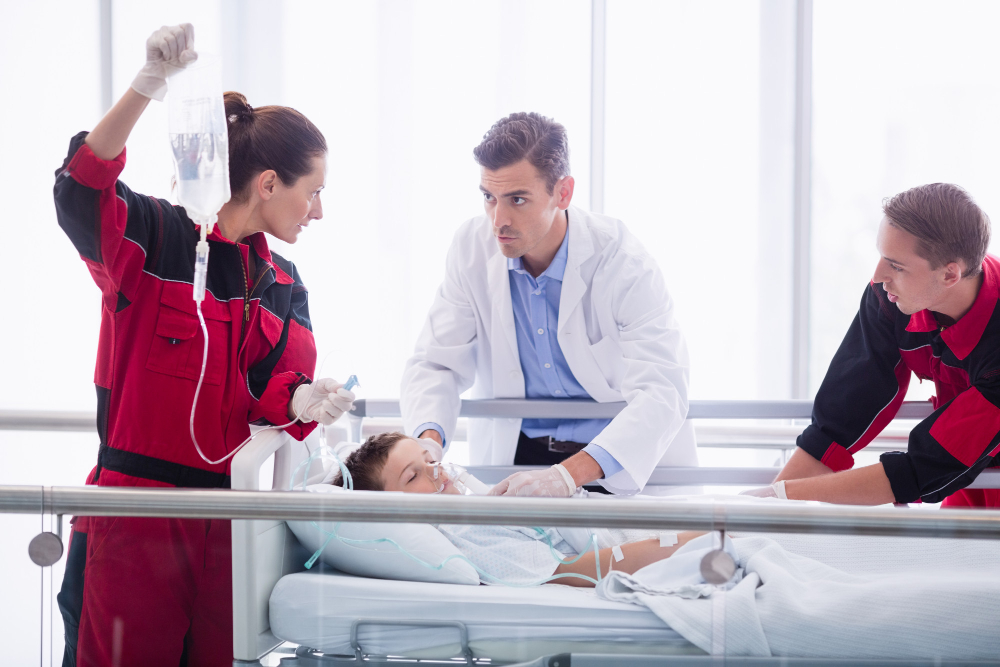
Emergency doctors diagnose critical conditions quickly by following a fixed order. They check airway, breathing and circulation first, run bedside tests, and treat the most dangerous possible cause before anything else. At an accident and emergency hospital in Mumbai, this process begins when the patient arrives. Treatment often begins before the final diagnosis is confirmed.
This blog explains who does what, how the steps work, and what you can do to help.
In an emergency room (ER), doctors don’t wait for a perfect answer. They look for the most dangerous problem that could explain the symptoms and rule it out first.
The goal in an ER is:
Think of chest pain. It could be acidity, a pulled muscle, or a heart attack. The ER team treats it as a heart attack until tests prove otherwise. That’s not pessimism. It’s safety.
Triage is the sorting system at the ER door. A nurse or doctor checks each patient on arrival. They look at pulse, blood pressure, oxygen level, temperature and the main complaint.
Patients are then placed into priority groups.
|
Colour |
Meaning |
Example |
|
Red |
Life-threatening |
Cardiac arrest, severe bleeding |
|
Orange |
Very urgent |
Stroke symptoms, chest pain |
|
Yellow |
Urgent |
Broken bone, high fever |
|
Green |
Non-urgent |
Minor cut, mild cold |
Many people feel upset when someone who arrived later gets seen first. But the system exists for one reason: a person with a blocked airway cannot wait behind a person with a sprained ankle.
Once a patient is in the treatment bay, doctors use a simple checklist known as ABCDE.
The order matters. A blocked airway is immediately life-threatening, so the airway comes first.
Doctors fix problems as they find them. If oxygen is low, they give oxygen. If pressure is falling, they start fluids. Diagnosis and treatment happen together, not one after the other.
Next, the team uses quick tests chosen according to the patient’s symptoms.
Test |
What It Shows |
|
ECG |
Heart attack, abnormal rhythm |
|
Blood sugar check |
Dangerously low or high sugar |
|
Pulse oximetry |
Oxygen level in blood |
|
Blood tests |
Infection, kidney issues, heart enzymes |
|
Bedside ultrasound |
Internal bleeding, fluid around the heart |
|
CT scan |
Stroke, head injury, organ damage |
|
Chest X-ray |
Pneumonia, collapsed lung, rib fractures |
Doctors don’t order everything for everyone. They pick tests based on what they suspect. This saves time and avoids unnecessary radiation or cost.
Emergency doctors learn to recognise common combinations of symptoms.
A sweaty, pale patient with pain spreading to the left arm points to the heart. A person with a drooping face and slurred speech suggests stroke. A fever with a racing heart and low blood pressure raises concern about sepsis.
These two phrases are common in emergency medicine. In a heart attack, heart muscle can be damaged the longer the blockage lasts. In a stroke, brain cells can be damaged the longer blood flow is reduced.
So for these conditions, early assessment and treatment are important.
Diagnosis in an ER is a team effort. No single doctor does it alone.
Emergency physician: Leads the case and decides priorities
Triage nurse: Takes first vitals and sorts patients
ER nurses: Give medicines, draw blood, monitor continuously
Radiologist and technician: Perform and read scans
Lab staff: Run urgent tests
Specialists on call: Cardiologist, neurologist, surgeon, orthopaedic and others
Go to the emergency room immediately for any of these:
If you are unsure whether symptoms are serious, call an emergency number or go to an emergency department.
Travel time to a hospital can vary in Mumbai because of traffic and population density. It helps to know in advance what facilities to look for:
Jaslok Hospital is a multi-speciality hospital on Peddar Road in South Mumbai. It runs an emergency department with diagnostics and specialists. It helps to know your nearest option before a crisis, not during one.
Families can help the emergency team with a few simple actions.
Carry or note down:
If a patient takes blood thinners, tell the doctor straight away. This one detail can change treatment completely.
Emergency diagnosis follows a clear system: sort, stabilise, test, treat. Doctors work through the same steps each time.
Know your nearest emergency hospital, keep key medical details handy, and seek care without delay when symptoms are serious.
Emergency care depends on the patient’s age, symptoms, medical history, and current medicines, so the steps described here may not apply to every patient. Triage colour systems, test choices, and treatment decisions are made by the treating doctors for each case. Tests have limits. For example, a single normal ECG or blood test does not always rule out a serious condition, and some scans involve radiation. This article is for education only and does not replace medical assessment. In an emergency, call 108 or 112 and follow the instructions of the emergency team.
Relevant Blog : How to Stay Calm and Act Fast in a Medical Emergency
They use triage. Nurses and doctors check vital signs and symptoms, then rank patients by how quickly they could get worse. Life-threatening cases go first.
An ECG is one of the first tests done. Blood tests follow and help confirm the result.
It is a term used in emergency medicine for the first hour after a serious injury or illness, when early treatment is considered important.
Yes. They treat the most dangerous possibilities first and refine the diagnosis as results arrive.
Bring ID, a list of medicines and allergies, old medical reports, and a family contact number. Even a photo of prescriptions on your phone helps.