


Page Under Maintenance
This page is currently under maintenance.
Please communicate at the hospital help desk for assistance.
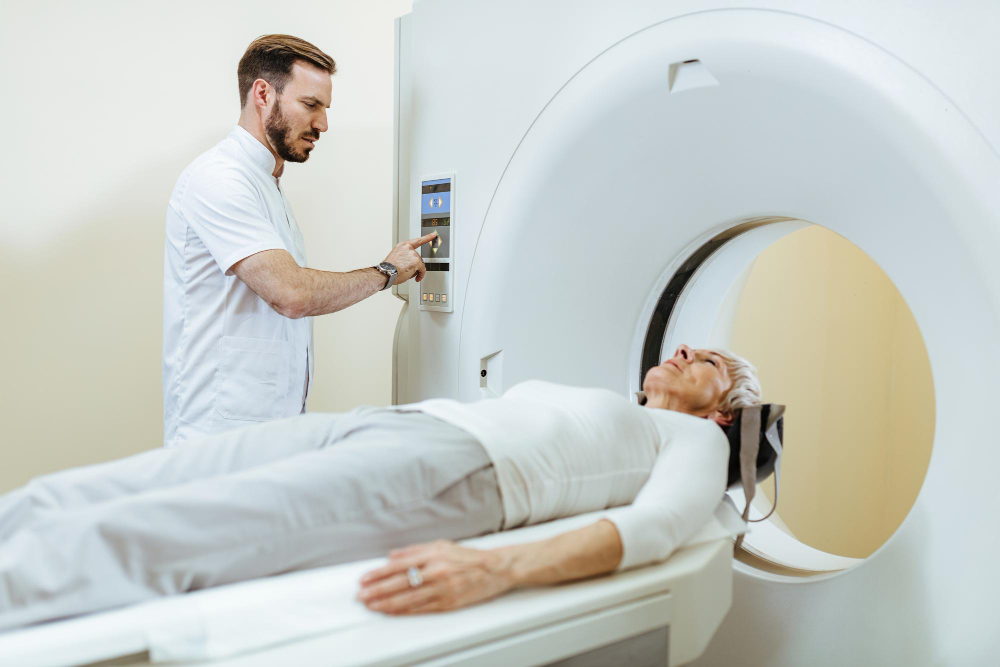
Cancer treatment has evolved significantly over the decades, and today, patients have access to highly advanced, targeted therapies that were unimaginable just a generation ago. Among the most powerful tools in modern oncology is radiation therapy, a treatment that uses precisely directed high-energy rays or particles to destroy cancer cells and shrink tumours. At Jaslok Hospital, our dedicated oncology team combines clinical expertise with cutting-edge technology to deliver radiation therapy that is both effective and as comfortable as possible for the patient.
If you or a loved one has been diagnosed with cancer and radiation therapy has been recommended, understanding how this treatment works can help ease anxiety and support informed decision-making.
Radiation therapy, also called radiotherapy, is a medical treatment that uses high doses of radiation to kill cancer cells or slow their growth. Radiation works by damaging the DNA inside cancer cells, making it impossible for them to divide and multiply. While healthy cells in the surrounding area may also be affected, they have a much stronger ability to repair themselves compared to cancer cells.
Radiation therapy is used to:
Radiation therapy may be used alone or in combination with surgery, chemotherapy, immunotherapy, or hormone therapy, depending on the type and stage of cancer.
There is no single form of radiation therapy. Oncologists at Jaslok Hospital evaluate each patient's diagnosis, tumour location, size, and overall health to determine which type is most appropriate.
This is the most common form of radiation therapy. A machine called a linear accelerator (LINAC) directs beams of high-energy X-rays, protons, or electrons at the tumour from outside the body. The machine rotates around the patient, targeting the tumour from multiple angles while minimising exposure to surrounding healthy tissue.
Subtypes of EBRT include:
In brachytherapy, radioactive material is placed directly inside or very close to the tumour. This can be done temporarily (for a few minutes to a few days) or permanently, depending on the type of cancer. Brachytherapy is commonly used for cervical cancer, prostate cancer, breast cancer, and head and neck cancers. Because the radiation source is so close to the tumour, very high doses can be delivered with minimal impact on surrounding healthy tissue.
In this approach, radioactive substances are swallowed or injected into the bloodstream. The most well-known example is radioactive iodine (RAI), used to treat thyroid cancer. Because thyroid cells naturally absorb iodine, the radioactive form concentrates in thyroid tissue and destroys cancer cells throughout the body.
One of the most critical phases of radiation treatment is the planning process, known as simulation. This step ensures that radiation is delivered accurately to the right area every single time.
Before treatment begins, the patient undergoes CT scans, MRI scans, or PET scans. These detailed images allow the oncology team to precisely locate the tumour, understand its size and shape, and identify nearby critical structures such as the spinal cord, lungs, heart, or kidneys that must be protected.
Using specialised software, a radiation oncologist and medical physicist work together to design the treatment plan. This involves determining the optimal beam angles, the total dose of radiation required, and the number of sessions (called fractions) over which that dose will be delivered. The goal is to maximise the dose to the tumour while minimising it to healthy tissue.
The patient lies in the same position they will be in during treatment. Immobilisation devices, such as a custom-fitted mesh mask for head and neck cancers, may be created to ensure the patient stays perfectly still during every session. Small marks or tattoos may be placed on the skin as reference points for alignment.
Before the first treatment session, the plan is verified using test images and often a dry run to ensure everything is precisely calibrated.
Many patients feel anxious before their first radiation session, but the procedure itself is painless and non-invasive.
Most patients receive radiation therapy five days a week for several weeks, depending on the treatment plan. The total number of sessions is carefully calculated to deliver the right cumulative dose.
Radiation therapy is a localised treatment, which means side effects are generally limited to the area being treated. Side effects vary depending on the location, dose, and duration of treatment.
Common side effects include:
Most side effects are temporary and resolve after treatment ends. The experienced oncology team at Jaslok Hospital closely monitors patients throughout treatment and provides supportive care to manage side effects effectively.
Radiation therapy is used to treat a wide range of cancers, including:
It is also increasingly used alongside immunotherapy and targeted therapies as part of multimodal treatment strategies. Your oncologist will determine whether radiation therapy is right for you based on the cancer type, stage, location, and your overall health.
Related: Foods That Help Reduce Radiation Side Effects
At Jaslok Hospital, we understand that a cancer diagnosis changes lives. Our Department of Radiation Oncology is equipped with state-of-the-art technology and staffed by a multidisciplinary team of radiation oncologists, medical physicists, radiation therapists, and nurses, all working together to deliver the safest, most effective treatment possible.
We are committed to treating every patient with compassion, precision, and the very latest advances in radiation oncology. From the first consultation through to follow-up care, you are supported every step of the way.
If you have questions about radiation therapy or would like to consult with our oncology team, contact Jaslok Hospital today to schedule an appointment.