


Page Under Maintenance
This page is currently under maintenance.
Please communicate at the hospital help desk for assistance.
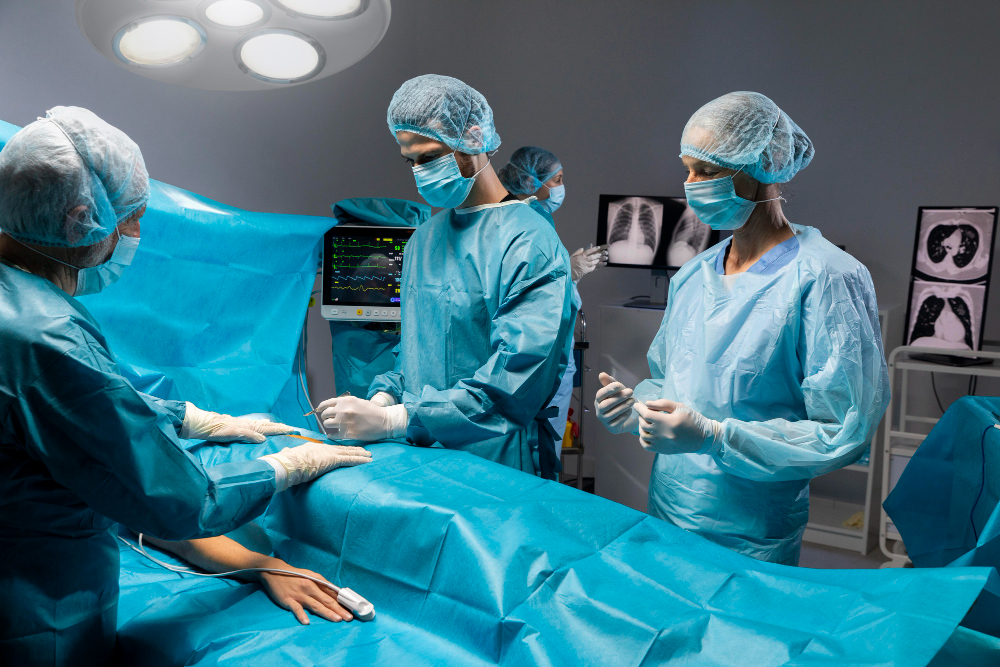
Modern medicine has been revolutionized by laparoscopic surgery, often known as minimally invasive surgery. It is now the most used surgical technique in the world due to its smaller incisions, quicker recovery, and less problems. However, a lot of patients continue to question if laparoscopy is really safe. What dangers exist? Are there any circumstances in which laparoscopy is not advised?
Making educated decisions requires an understanding of the absolute contraindication to laparoscopic surgery, the effects of pneumoperitoneum in laparoscopic surgery, and the actual facts regarding the risk of death from laparoscopy.
Everything you need to know about laparoscopy safety, risk management, contraindications, and how selecting the best laparoscopic surgeon in Mumbai significantly lowers complications is included in this thorough book.
Because laparoscopy requires fewer incisions, there is less chance of infection, less blood loss, and less pain than with open surgery. Additionally, it leads to a quicker recovery period and a shorter hospital stay.
A catchphrase and a precise synopsis of the main advantages of minimally invasive surgery (MIS). This innovative approach combines specialized procedures and tools to execute surgeries through tiny wounds, resulting in a range of advantages over standard open surgery.
Laparoscopy employs small incisions and a camera, as opposed to open surgery, which necessitates massive cuts. This accelerates healing, lessens pain, and minimizes tissue damage.
Get immunized, wash your hands with soap and water or use hand sanitizer, and refrain from touching your face.
Laparoscopy is safer for the majority of patients because internal organs are exposed to fewer external pollutants, which greatly reduces the risk of infection.
Enhanced Recovery After Surgery (ERAS) protocols are standardized, evidence-based methods to perioperative treatment that can speed recovery and shorten hospital stays. ERAS integrates pre- and post-operative techniques to reduce surgery stress, enhance patient satisfaction, and shorten hospital stays and problems. Pre-admission counseling, carbohydrate loading, early mobilization, and decreased opioid use are important components.
Compared to patients following open surgery, laparoscopic surgery patients typically resume employment and everyday activities more quickly.
Patients with acute peritonitis, coagulation problems, shock, or severe cardiovascular disease may not be safe candidates for laparoscopy. Intestinal blockage, severe liver illness, abdominal wall infection, and poor patient participation are further contraindications.
A condition that makes laparoscopy dangerous or impossible to perform is known as an absolute contraindication to laparoscopic surgery. Open surgery becomes the best option in these circumstances.
Among the absolute contraindications are:
Laparoscopy cannot safely give the immediate and direct access to the abdominal cavity needed in these instances.
Relative contraindications indicate that a therapy or medication can be used, but only with caution and if the possible benefits clearly outweigh the dangers. Absolute contraindications indicate that a treatment or medication should never be used because of a significant risk of a life-threatening condition.
Relative contraindications let surgeons to do laparoscopy, however absolute contraindications forbid it based on:
Even patients with complicated problems will receive appropriate and safe care if they choose the best laparoscopic surgeon.
An essential and crucial step in laparoscopic surgery is pneumoperitoneum, which is the insufflation of gas into the abdominal cavity to create a working and viewing space. It allows for a less intrusive procedure, but because of the increased intra-abdominal pressure (IAP) and gas absorption, it causes major physiological changes in the patient's body.
The presence of gas or air outside of the hollow organs in the abdominal cavity is known as pneumoperitoneum.
The procedure of delivering carbon dioxide gas into the abdominal cavity during laparoscopic surgery is known as pneumoperitoneum. This causes the abdomen to swell, giving surgeons more room to operate safely and clearly.
Respiratory alterations like decreased compliance and elevated airway pressure, cardiovascular effects like decreased cardiac output and increased systemic vascular resistance, and renal effects like decreased blood flow and possible oliguria.
Pneumoperitoneum has physiological impacts on the body, while being generally safe. These effects include:
Heart attacks and strokes, as well as symptoms like dizziness, shortness of breath, and chest pain, are examples of cardiovascular consequences.
During surgery, they are normally tightly managed and are mild.
Common respiratory symptoms like coughing and dyspnea might be accompanied by more serious illnesses like emphysema and respiratory failure.
During anesthesia, these effects are controlled by modifying the ventilation parameters.
Effects on the abdominal organs might range from mild discomfort to more severe illnesses like abdominal compartment syndrome.
Once the gas is expelled, all of these transient effects return to normal.
Patients with cancer, the elderly, and those who are morbidly obese are at a higher risk of developing pneumoperitoneum. Immunosuppression from chemotherapy or radiation therapy puts cancer patients at risk, and physiological stress-related problems are more common in the elderly and extremely obese, particularly during laparoscopic surgery.
Patients with the following ailments need close observation:
Skilled experts guarantee that these dangers are reduced. This emphasizes how crucial it is to speak with Mumbai's best laparoscopic surgeon in order to have a safe surgical procedure.
Laparoscopic surgery carries an extremely low risk of fatality, typically ranging from 1 in 6,500 surgeries for benign illnesses to higher rates in difficult instances including malignancy or emergency scenarios.
Yes, when carried out by a trained surgeon, laparoscopy is usually safe and frequently results in fewer complications than open surgery.
Yes, laparoscopy is generally safe and often causes fewer issues than open surgery when performed by a qualified surgeon.
Serious problems are uncommon but can happen:
However, these occurrences typically result from:
For this reason, it is highly advised to choose the best laparoscopic surgeon in Mumbai.
Maintaining a healthy lifestyle with a balanced diet, frequent exercise, and quitting smoking are factors that lower the chance of dying.
The fundamental idea is that the risk decreases with increasing surgeon ability.
Through meticulous pre-operative planning, technical mastery, adherence to safety guidelines, efficient team communication, and conscientious post-operative care, surgeons reduce the hazards associated with laparoscopic procedures.
A thorough health assessment, comprising a thorough physical examination and medical history, as well as certain tests to identify potential hazards, are all part of thorough preoperative checks.
Surgeons assess:
This aids in determining any absolute contraindications to laparoscopic surgery in advance.
Advanced imaging creates detailed images of the inside of the body for diagnosis without intrusive procedures using technologies such as MRI, CT, PET, and AI. By offering precise, comprehensive views of organs, tissues, bones, and blood arteries, these techniques assist physicians in early illness detection, diagnosis confirmation, disease staging, and treatment planning.
Before surgery, a clear picture is provided by ultrasound, CT, or MRI scans, which lessens surprises.
The real-time evaluation of a patient's nervous system performance during surgery to assist prevent neurological harm is known as intraoperative monitoring. In order to give the surgical team vital input, a multidisciplinary team uses methods such as electromyography (EMG), motor evoked potentials (MEPs), and somatosensory evoked potentials (SSEPs).
Constant observation of:
This guarantees the early identification of occurrences associated to pneumoperitoneum.
Leading surgeons adhere to:
Selecting the best laparoscopic surgeon in Mumbai guarantees accuracy and security.
Laparoscopy is very patient-friendly, safe, and efficient. Like any surgical treatment, there are dangers, but they are often controllable, especially when performed by highly qualified professionals.
Patients are better equipped to make decisions when they are aware of the absolute contraindication to laparoscopic surgery, the effects of pneumoperitoneum in laparoscopic surgery, and the uncommon but potential danger of death during laparoscopy.
Laparoscopy is still one of the safest surgical procedures accessible today if you select the best laparoscopic surgeon in Mumbai, have a thorough examination, and carefully follow your aftercare instructions.
Laparoscopy should not be performed on patients with shock, uncontrolled bleeding, severe cardiac disease, or untreated peritonitis.
The heart, lungs, and blood pressure may be momentarily impacted by CO2 inflation, but it is continuously monitored for safety.
Experience guarantees safe surgical results and lowers complications.