


Page Under Maintenance
This page is currently under maintenance.
Please communicate at the hospital help desk for assistance.
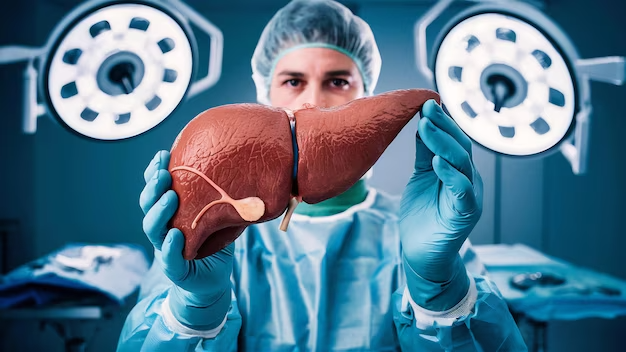
Liver transplantation is now a life-saving surgery with amazing results, rather than a high-risk treatment. Survival rates have significantly increased over the last 20 years because to the tremendous advancements in medical research, surgical skill, and post-operative care. These days, safer operations, quicker recovery, and improved long-term quality of life are enjoyed by both donors and recipients.
The success rate of donor liver transplants, particularly those involving living donors, which are frequently carried out in India, is one of the most talked-about aspects of contemporary hepatology. Patients now have access to top-notch care and results that meet international standards because of technological breakthroughs and the availability of the best liver transplant surgeon.
This study investigates the primary reasons why liver transplants are more successful today, as well as how professional medical teams and advanced hospitals in Mumbai contribute to this success.
With 1-year survival rates reaching 90% and 5-year survival rates at 75–85% in seasoned institutions, liver transplant success rates are at an all-time high.
In terms of medicine, the success of a liver transplant is determined by:
Today, the liver transplant success rate for donors approaches 95% in well-equipped facilities, making living donor liver transplants safer than ever.
Earlier, liver transplants carried substantial dangers due to restricted technology and lack of specialist care. Today:
The advancements in surgery, diagnostics, and post-transplant monitoring have all contributed to this improvement.
Increased personalization, early detection capabilities, and less intrusive methods are key medical innovations that are generating improved success rates in patient outcomes.
Modern liver transplant surgeries use minimally invasive and precision-based approaches. Surgeons today:
The experience of the liver transplant surgeon plays a critical part in assuring both donor and recipient safety throughout these complex procedures.
Sophisticated imaging technologies like:
enable precise surgical planning by surgeons. This allows better donor selection and enhanced graft compatibility, thereby improving the liver transplant success rate for donor.
Incorporate thorough immunological, psychological, and medical screening (ABO type, HLA matching, crossmatch) to guarantee donor safety and enhance long-term transplant viability.
Extensive physical and psychological assessments are performed on living liver donors. These evaluations guarantee:
Donor procedures are now safer than ever thanks to this extensive screening procedure.
Each recipient and donor is assessed separately. Careful consideration of factors like age, liver health, and metabolic disorders greatly reduces problems and improves outcomes.
By bridging the gap between healthcare and the legal system and offering independent, impartial, and specialized information to assist courts in understanding complex medical concerns, expert medical professionals play a vital role. In litigation, malpractice, and personal injury cases, they examine medical records, set standards of treatment, establish causality, and evaluate injuries.
The participation of a liver specialist guarantees:
Experts in a variety of fields, including hepatology, nutrition, and mental health, coordinate care.
Today, successful liver transplants depend on a collaborative effort that consists of:
This coordinated care paradigm has considerably enhanced survival rates and reduced hospital stays.
Increases transplant survival and lowers infections by using interdisciplinary teams, improved immunosuppressive control, and sophisticated, non-invasive monitoring (such as donor-derived cell-free DNA and remote patient monitoring). Strict medication adherence, regular exercise, and early detection of rejection or problems are important tactics.
Immunosuppressive medications of the new generation include:
Long-term survival and graft acceptability have improved as a result.
Patients are closely observed by means of:
Years after transplantation, these organized activities help ensure long-term success.
By using a piece of a healthy person's liver that regenerates in both the donor and the recipient, Living Donor Liver Transplants (LDLT) represent a significant, life-saving advancement in the treatment of end-stage liver disease.
In terms of living donor liver transplants, India has emerged as a global leader. Benefits consist of:
For both donors and recipients, this has greatly increased the success rate of liver transplants.
The best ways to speed up liver recovery are to abstain from alcohol entirely, eat a diet high in leafy greens, cruciferous vegetables, nuts, and healthy fats like avocado and olive oil, and drink plenty of water.
Donors can restore nearly normal liver volume in a matter of weeks thanks to the liver's exceptional capacity to regenerate, guaranteeing long-term health and safety.
In order to promote self-care, improve quality of life, and lessen reliance on medicine, patient knowledge is essential.
Today's patients are better informed about:
This awareness lowers problems and promotes graft durability.
Related: Exercise Tips for Liver Transplant Patients
From active listening and reassurance from friends to professional therapy, emotional and psychological support entails offering care, empathy, and validation to help people manage stress, anxiety, and challenging emotions. Providing a safe space to process experiences and discover coping mechanisms helps people feel heard, less alone, and more in control.
It is widely acknowledged that mental health is essential to the success of transplants. Patients and donors can deal better both before and after surgery with the aid of counseling and support groups.
Today, liver transplants are increasingly successful due to the ideal combination of cutting-edge technology, skilled medical personnel, and thorough post-operative care. Medical research has advanced to such an extent that the liver transplant success rate for donors has significantly improved.
Cities like Mumbai continue to set new standards in liver transplantation thanks to their skilled surgeons, specialist liver hospitals, and patient-centered care. For patients facing end-stage liver disease, a liver transplant today offers not just survival, but a chance at a healthy, meaningful life.
In advanced transplant institutions, the liver transplant success rate for donors approaches 95%, with the majority of donors returning to normal life within weeks.
Mumbai has the best liver transplant hospital in the city, skilled surgeons, cutting-edge facilities, and thorough post-transplant care.
Look for surgeons with considerable expertise, good success rates, interdisciplinary team assistance, and affiliation with reputable transplant institutions