1. What is it? Any common name for this procedure?
Varicose veins are swollen, twisted, and enlarged veins that usually appear on the legs and feet. They occur when the tiny valves inside the veins stop working properly. In a healthy vein, these valves act as one-way "doors" that keep blood flowing toward the heart. When they fail, blood flows backward and pools in the vein, causing it to stretch and bulge.
Common Names/Related Terms:
- Spider Veins: A milder, smaller version of varicose veins.
- Chronic Venous Insufficiency (CVI): The medical term for the underlying condition of poor vein function.
- Varicosities.
2. Common Indications: When is Treatment Recommended?
- While often a cosmetic concern, treatment is medically necessary when symptoms interfere with daily life or indicate a health risk:
- Aching and Heaviness: A persistent "dull ache" or feeling of fatigue in the legs, especially after standing.
- Swelling (Edema): Swelling in the ankles and feet that worsens toward the end of the day.
- Skin Changes: The skin over the veins becomes thin, itchy (stasis dermatitis), or discolored (hemosiderin staining).
- Venous Ulcers: Open sores that form near the ankles due to long-term blood pooling.
- Spontaneous Bleeding: If a bulging vein near the surface is bumped and bleeds profusely.
3. List of Associated Diseases and Conditions
- Superficial Thrombophlebitis: An inflammation of the vein caused by a small blood clot near the skin's surface.
- Deep Vein Thrombosis (DVT): A serious condition where a clot forms in the deep veins, which can be life-threatening if it travels to the lungs.
- Lipodermatosclerosis: Hardening of the fat under the skin, making the lower leg feel woody or firm.
4. List of Screening Tests and Assessment Tools
|
Tool
|
Purpose
|
|
Venous Duplex Ultrasound
|
The Gold Standard. This painless test uses sound waves to see the blood flow and check if the valves are leaking (reflux).
|
|
Visual Mapping
|
A physical exam where the doctor checks for swelling and skin texture changes while you are standing.
|
|
Trendelenburg Test
|
A physical maneuver used to determine the exact site of the valve leakage.
|
5. Am I Eligible for Evaluation?
- Symptomatic: You experience pain, throbbing, or cramping that is not relieved by elevation.
- Skin Integrity: You have signs of "venous stasis," such as rashes or sores that won't heal.
- Failed Conservative Trial: Most insurance companies require you to try compression stockings for 3–6 months before approving medical procedures.
- No Active DVT: Treatment for varicose veins is usually delayed if there is an active clot in the deep system.
6. Common Treatment Procedures
- Sclerotherapy: Injecting a chemical solution into the vein that causes it to scar and close. Best for smaller veins.
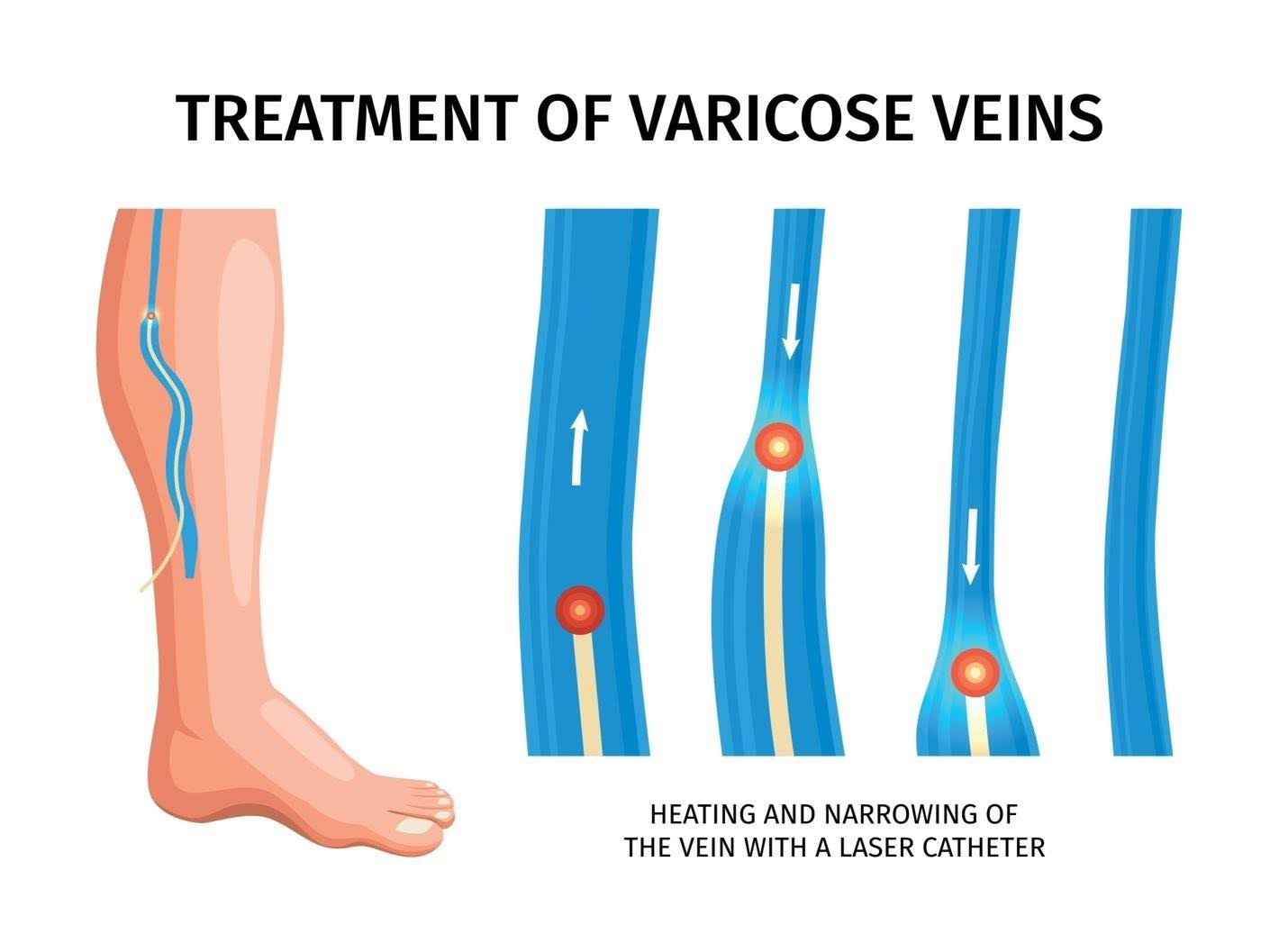
- Endovenous Laser/Radiofrequency Ablation: Using heat from a laser or radio waves to seal the main leaking vein.
- VenaSeal: A medical "superglue" used to shut down the diseased vein without using heat.
- Ambulatory Phlebectomy: Removing the visible, bulging veins through tiny "micro-incisions" that don't require stitches.
7. Days Required for Recovery
- Procedure Time: 30 to 60 minutes.
- Hospitalization: 0 Days. These are performed as outpatient procedures in a clinic or office setting.
- Return to Work: Usually the next day for office work; 3–5 days for strenuous jobs.
- Full Healing: Bruising usually fades in 2 weeks; full results are seen in 1–3 months.
8. Benefits of Treatment
- Pain Relief: Significant reduction in the "heavy" and "throbbing" sensations.
- Improved Circulation: By closing the "leaky" veins, the body is forced to use the healthy deep veins, improving overall blood flow.
- Wound Healing: Reducing the pressure in the legs allows venous ulcers to heal much faster.
- Cosmetic Confidence: Greatly improves the appearance of the legs, reducing purple/blue bulging lines.