


Page Under Maintenance
This page is currently under maintenance.
Please communicate at the hospital help desk for assistance.
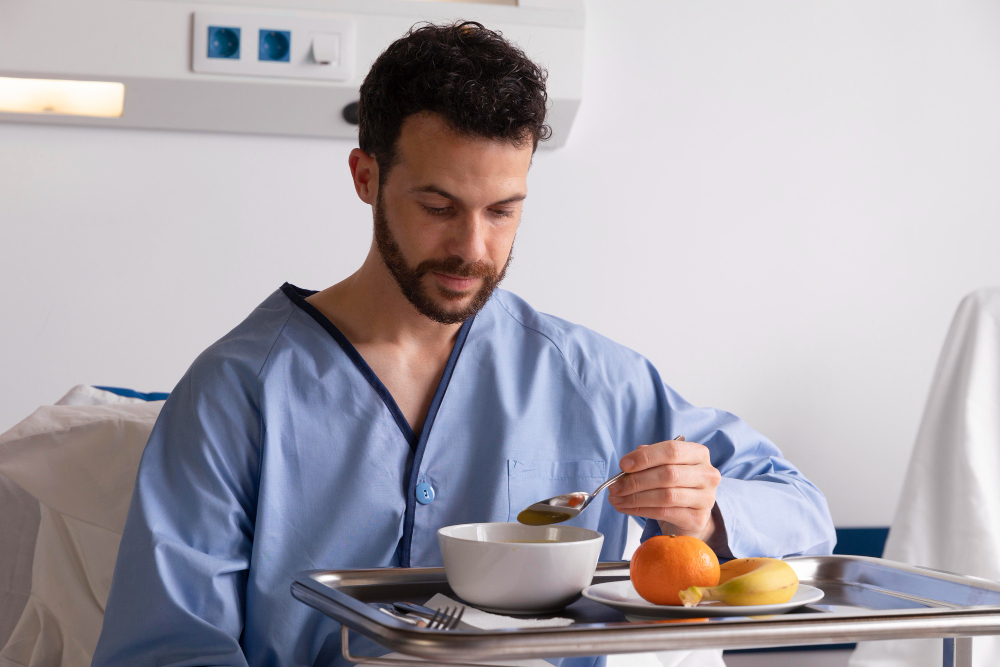
Patients recovering from critical illness need more protein, enough calories, steady fluids and small, frequent meals. A dietitian should plan these around the person’s condition. Planning usually starts in the ICU and continues through discharge and home care. Good food will not replace medical treatment, but it helps muscles rebuild, wounds heal and the immune system recover.
The rest of this guide from Jaslok Hospital in Mumbai explains what to eat, when to eat it and what to avoid.
A serious illness puts the body under heavy stress. Infection, surgery or organ failure makes the body burn through its reserves quickly. Many ICU patients lose a lot of muscle in just a few days.
That is why a patient can look “recovered” and still feel too weak to stand. Muscle loss, low energy and slow healing are common after a long ICU stay. Doctors sometimes call this post-intensive care syndrome.
Food gives the body the raw material to repair itself. Without enough protein and calories, recovery can be slower and weakness can last longer.
People who spend time in intensive care may need a planned diet. This includes patients who had:
Older adults and people with diabetes, kidney disease or low body weight need extra care. Their margin for error is smaller.
Early, once the patient is stable. At first, this may be through a feeding tube or a vein. As the patient improves, they move to a normal diet.
The usual progression looks like this:
Never rush a step. A patient who coughs or chokes while eating may need a swallowing test first.
Recovery nutrition is a team job. In an ICU, the intensivist, dietitian, nurse, physiotherapist and speech therapist work together. Each one watches a different piece of the puzzle.
The dietitian checks weight, blood reports and kidney function. The speech therapist tests whether swallowing is safe. The physiotherapist matches exercise to food intake, because protein works best when muscles are used.
Ask the hospital for a written diet chart before discharge. It should list foods to eat, foods to limit, portion sizes and warning signs. Families often forget verbal instructions within a day or two.
Here is a quick look at what matters most and why.
|
Nutrient |
Why It Matters |
Good Indian Food Sources |
|
Protein |
Rebuilds muscle, heals tissue |
Dal, paneer, curd, eggs, fish, chicken, soya, sprouts |
|
Calories |
Gives energy for healing |
Rice, roti, ghee, nuts, banana, potatoes |
|
Healthy fats |
Dense energy in small portions |
Nuts, seeds, olive or mustard oil |
|
Vitamin C |
Supports wound healing |
Amla, orange, guava, lemon |
|
Zinc |
Helps immunity and repair |
Pumpkin seeds, chickpeas, curd |
|
Fluids |
Prevents dehydration |
Water, coconut water, buttermilk, soups |
Protein needs are often higher during recovery than in healthy adults. The exact figure depends on weight, kidney health and the stage of illness. Your dietitian should set the number. Do not guess it, especially with kidney or liver problems.
Appetite is rarely normal after the ICU. A big plate can feel overwhelming. These habits help.
A breathing tube can leave the throat sore and weak. Some patients have trouble swallowing for days or weeks afterward.
Watch for these signs:
If you notice any of them, tell the care team. A speech therapist can recommend the right texture, such as pureed, minced or thickened liquids. Thin liquids like water and tea are often the hardest to swallow safely at first.
One plan does not fit everyone. Adjustments are common.
Blood sugar can swing after illness and steroid use. Choose whole grains, pulses and vegetables. Spread carbohydrates evenly across the day. Do not skip meals if you are on insulin.
Protein, potassium, phosphorus and fluid may need limits. Never copy a general “high-protein” plan. Ask the nephrologist and dietitian for a personal chart.
Keep salt low. Prefer baked, steamed or boiled foods over fried ones. Include fruits, vegetables and oats for fibre.
Small, frequent meals work best. A late-night snack can protect muscle. Avoid alcohol completely.
Dehydration causes confusion, constipation and weakness. It also slows recovery. Sip fluids through the day rather than gulping.
Good choices include water, nimbu pani with a pinch of salt, coconut water, thin dal soup, buttermilk and clear vegetable broth. Patients with heart or kidney failure may have a fluid limit. Follow the doctor’s number exactly.
This is an example only. Your dietitian will tailor it.
Food alone will not rebuild muscle. Gentle movement tells the body where to put the protein. Start with sitting up, short walks and the exercises your physiotherapist teaches. Increase slowly.
Sleep matters too. Poor sleep is common after the ICU, and it hurts appetite and healing. Keep regular meal and sleep times, and limit screens at night.
Contact the hospital without delay if the patient has:
Regular follow-up visits let the team adjust the plan as the patient gets stronger.
Relevant Blog : Why Early Detection Is Key in Critical Care Treatment
Recovery from critical illness is slow. Some weeks will feel like a step back. That is normal. A steady routine and patience help, and the care team can explain each stage.
To discuss a recovery diet plan, speak to the clinical nutrition and critical care teams at Jaslok Hospital in Mumbai. Ask the dietitian for a diet plan before you take your loved one home.
Focus on protein-rich, soft and easy-to-digest foods like dal, eggs, curd, paneer, khichdi and soups. Add healthy fats for extra energy and eat small meals often.
It varies. Some people improve in weeks. Others need several months, especially after long ventilator use. Nutrition and physiotherapy both support recovery.
They can, when a patient cannot eat enough through food. Use them only with a dietitian’s advice, particularly if there is kidney or liver disease.