


Page Under Maintenance
This page is currently under maintenance.
Please communicate at the hospital help desk for assistance.
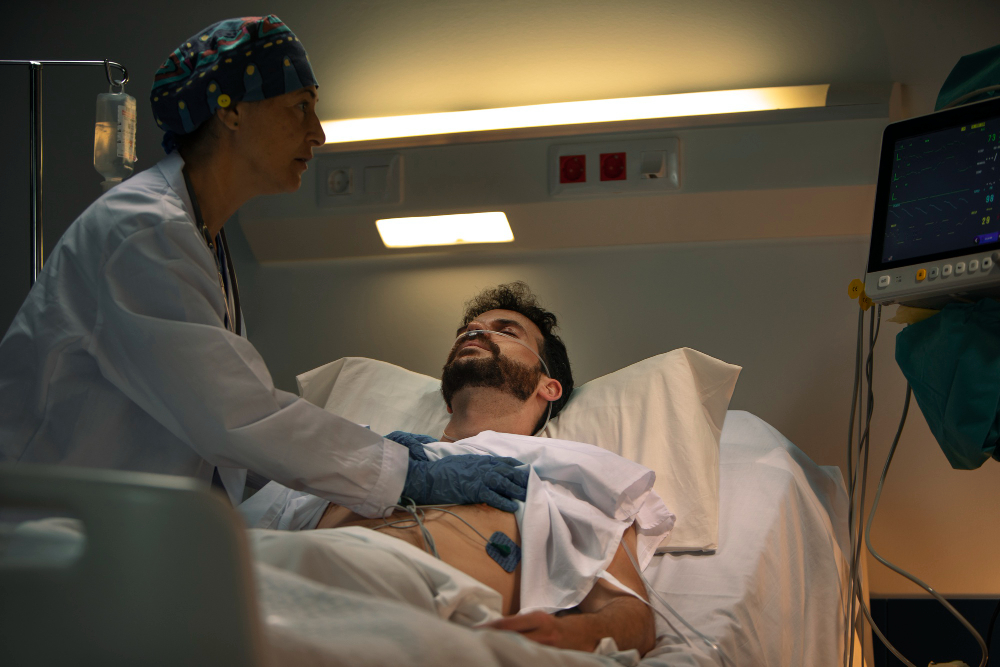
In the first 24 hours of intensive care, the team works to stabilise the patient, find the cause of the illness, and start treatment. Doctors check breathing, heart function, blood pressure, and organ health. They attach monitors, start medicines, and run urgent tests. In an ICU, a specialist team monitors the patient around the clock.
If someone you love has just been moved to the ICU, this guide will help. It explains what is happening, who is involved, and what you can do.
The first day sets the direction for the whole stay. A critically ill body can change fast. A drop in blood pressure or oxygen can turn serious within minutes.
Early care aims to:
That is why ICU teams move quickly, even when the room looks calm from the outside.
An ICU is not run by one doctor. It is a team effort, and knowing the roles helps you ask the right person the right question.
|
Team Member |
What They Do |
|
Intensivist |
A doctor trained in critical care who leads the plan |
|
ICU nurse |
Stays near the bed, monitors, gives medicines, records changes |
|
Specialist doctors |
Cardiologist, neurologist, surgeon, or others, as the case needs |
|
Respiratory therapist |
Manages oxygen, breathing machines, and airway care |
|
Clinical pharmacist |
Checks that drugs and doses are safe |
|
Dietitian |
Plans feeding, by mouth or by tube |
|
Physiotherapist |
Begins gentle movement as early as safe |
When a patient reaches the ICU, the team follows the “ABC” approach:
If breathing is weak, the doctor may place a breathing tube and connect a ventilator. If blood pressure is low, the team starts IV fluids or medicines to support the heart and vessels.
Nurses also attach monitors. These track heart rate, oxygen level, blood pressure, and breathing rate on a screen, every second.
Once the patient is stable enough, the team looks for the cause. Common early tests include:
Doctors may place extra lines. A central line gives access to a large vein for strong medicines. An arterial line gives continuous, exact blood pressure readings. A urinary catheter measures how well the kidneys are working.
These tubes can look frightening. They are tools that let the team see what is happening inside the body without disturbing the patient again and again.
With early results in, treatment becomes more specific. Depending on the illness, this may include:
Doctors review the plan often. If a medicine is not working, they change it.
By now the team knows how the patient is responding. The focus shifts to avoiding new problems. ICU patients are at risk of:
To prevent these, nurses turn the patient regularly, clean lines carefully, and may use special stockings or blood thinners. Early feeding is also started where possible, because good nutrition helps healing.
The noise and wires can feel overwhelming. Here is a simple guide.
|
Equipment |
Purpose |
|
Cardiac monitor |
Shows heart rhythm, rate, and oxygen level |
|
Ventilator |
Helps or takes over breathing |
|
Infusion pumps |
Deliver medicines at exact, steady doses |
|
Feeding tube |
Provides nutrition when the patient cannot eat |
|
Dialysis machine |
Cleans the blood when kidneys cannot |
Alarms sound often. Most are routine, such as a loose sensor or a finished drip. Nurses are trained to tell a real warning from a false one, so try not to panic when you hear a beep.
Waiting outside an ICU is hard. Knowing what to expect makes it easier.
Visiting rules are set by each ICU. Visits are usually short, at set times, and limited to a few people at once. This protects patients, whose immune systems can be weak.
Updates are given at scheduled times. Ask the ICU team when the doctor will speak with the family and how you will be informed of any major change.
The patient may look different. Swelling, tubes, and sedation are common. Your loved one may be asleep or confused. This is often part of the treatment.
Decisions may be needed. The doctor may ask for consent for a procedure, a blood transfusion, or a ventilator. Ask for the reason, the risks, and the alternatives in plain words.
You do not need medical knowledge to ask good questions. Try these:
Write the answers down. In stressful moments, memory fails, and notes help other family members stay informed.
Doctors look for steady trends, not one good number. Signs of progress include:
Some patients improve quickly. Others stay the same or need more support. A slow first day does not always mean a poor outcome. ICU recovery often moves in steps, with small setbacks along the way.
Families often forget their own health. Eat regular meals, sleep when you can, and share the waiting with relatives. Choose one family member to speak with the doctors and pass on updates, so the message stays consistent.
Be honest with children and elders in the family, in simple words. Hospital counsellors and social workers may be able to help, and it is fine to ask the ICU team about them.
Intensive care treatments can carry risks, and outcomes vary from patient to patient. They depend on the illness, age, other health conditions, and how the body responds to treatment.
The ICU team can explain the specific risks of any treatment before consent is given.
Relevant Blog : Nutrition Tips for Recovery After Critical Illness in Mumbai
Jaslok Hospital, on Peddar Road in South Mumbai, has served patients since 1973 and offers multi-speciality critical care support. You can learn more at jaslokhospital.net.
It depends on the illness. Some stay for a day or two after surgery. Others need weeks. The team reviews progress daily.
In most cases, yes. Even if the patient is sedated, hearing a familiar voice can be comforting. Keep your words calm and positive, and follow the nurse’s guidance.
Sedation reduces pain, anxiety, and stress on the body. It is also needed when a patient is on a ventilator. Doctors lower it as soon as it is safe.
ICUs have doctors and nurses on duty 24 hours a day, every day.
Usually not. Visits are limited to protect patients from infection and give staff room to work. Ask the hospital about its specific timings.