


Page Under Maintenance
This page is currently under maintenance.
Please communicate at the hospital help desk for assistance.
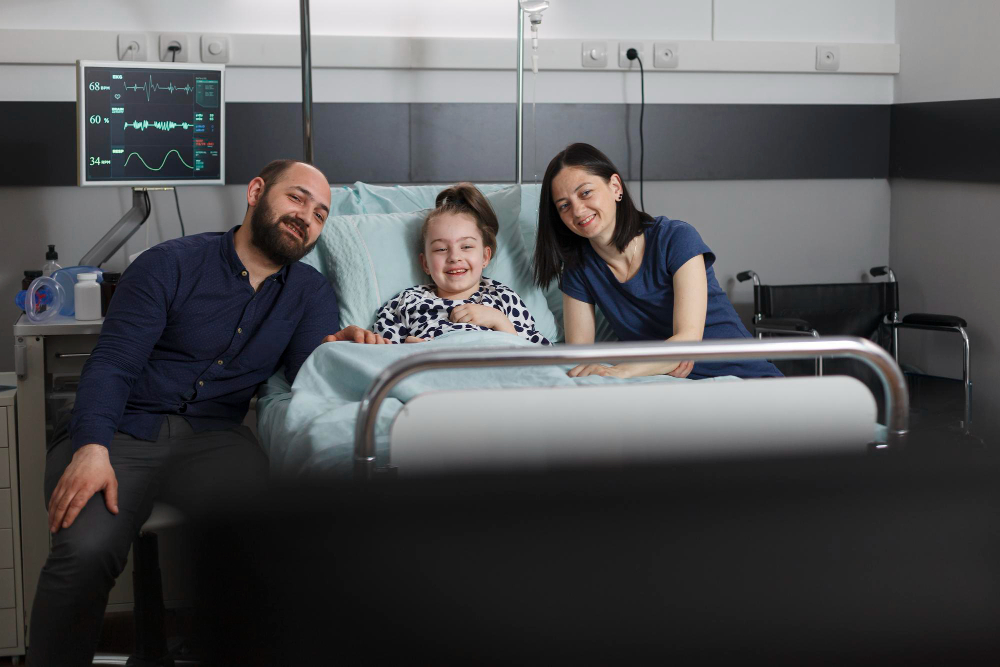
Watching someone you love get wheeled into an Intensive Care Unit is one of the most disorienting moments a family can face. The machines, the alarms, the unfamiliar words doctors use during rounds — none of it feels natural, and no one hands you a manual on the way in. This guide is that manual. It walks you through what actually happens inside ICU care, how to talk to the medical team, how to support your loved one when they can't speak for themselves, and — just as importantly — how to look after yourself while you do it. Research shows that between 20% and 60% of family members of ICU patients go on to experience symptoms of anxiety, depression, or post-traumatic stress after the ordeal is over, so learning how to navigate this period well matters for more than one person's health.
Before you can support anyone, it helps to know what you're actually walking into. An ICU isn't just "a hospital ward with more machines" — it runs on a different rhythm, a different staffing ratio, and a different set of priorities than the general floor your relative may have started on.
Critical care exists for patients whose organs need constant, minute-by-minute support — a ventilator breathing for them, medications titrated every few minutes to hold blood pressure steady, or continuous monitoring of heart rhythm. A general ward nurse might look after six or eight patients; an ICU nurse typically cares for one or two, because the margin for error is that much smaller. The lighting stays on around the clock, alarms are constant background noise, and treatment decisions can change hour to hour rather than day to day. Understanding this difference helps families make sense of why visiting rules, noise levels, and the pace of updates feel so different from the rest of the hospital.
You'll meet more specialists in the ICU than almost anywhere else in the hospital, and knowing their roles saves confusion later. The table below breaks down who does what.
|
Team Member |
What They Do |
|---|---|
|
Intensivist (Critical Care Physician) |
Leads overall treatment decisions and daily rounds |
|
ICU Nurse |
Provides bedside, minute-to-minute monitoring and care |
|
Respiratory Therapist |
Manages ventilators and breathing support |
|
Dietitian |
Plans nutrition, often delivered through a feeding tube |
|
Physiotherapist |
Helps prevent muscle loss and supports early mobility |
|
Social Worker / Counsellor |
Supports families with logistics, insurance, and emotional strain |
People end up in critical care for very different reasons, and the pathway matters because it shapes how long the stay is likely to last. Common admissions include severe infections such as sepsis or pneumonia, major surgery recovery, heart attacks or strokes, trauma from accidents, and organ failure requiring dialysis or ventilator support. Some patients arrive after a sudden collapse at home; others are transferred from a general ward when their condition unexpectedly worsens. Knowing the underlying reason helps families ask sharper questions and understand what "improvement" will actually look like for their specific situation.
The first walk to the bedside is usually the hardest one. A little preparation — knowing what you'll see, hear, and can bring — takes some of the shock out of that moment.
Expect tubes, wires, screens, and sounds you've never heard before — a ventilator's steady rhythm, a monitor's beeps, the hum of an infusion pump. Your loved one may look swollen, pale, or simply "not themselves" because of fluids, sedation, or bruising from procedures. This is normal and expected, not necessarily a sign things are going badly. Nurses are usually happy to explain each piece of equipment if you ask. Many families find it easier to take one supportive person in with them the first time, rather than going alone, so someone else can process the sights and sounds alongside them.
Doctors move fast during ICU rounds, so it helps to have questions ready rather than trying to think of them on the spot. Useful ones include: What is the current diagnosis, and what is the treatment plan for today? What would count as meaningful improvement this week? What are the biggest risks right now? Are there any decisions the family needs to make soon? Who is the best person to call for updates outside visiting hours? Writing these down beforehand, and bringing a notebook to jot down answers, keeps the family informed and avoids the same question being asked five different times by five different relatives.
Small, comforting items can make a real difference to a patient's environment without disrupting equipment or infection control. Good choices include a family photo, a soft blanket from home, lip balm, and a small speaker or headphones for familiar music. Avoid strong perfumes, flowers in some units (infection risk), large bags that clutter the space, and anything electrical that hasn't been checked with staff. Always ask the nursing staff before bringing anything new — rules vary between hospitals and even between units within the same hospital.
Even when a patient is sedated or unable to respond, family presence and voice matter more than most people realize. This section covers practical ways to stay connected during the hardest days.
Hearing is often one of the last senses affected by sedation, so speaking calmly, holding a hand, and using a familiar voice can genuinely help, even if there's no visible response. Keep conversation gentle and reassuring rather than alarming — avoid discussing worst-case scenarios at the bedside. Playing a favourite playlist quietly, reading a short passage aloud, or simply narrating the day ("it's Tuesday morning, the sun is out") gives the brain something familiar to hold onto during a disorienting stay.
ICU delirium is far more common than most families expect. Studies estimate that roughly 31% of ICU patients overall develop delirium, and the number climbs to between 50% and 80% among patients on mechanical ventilation. It shows up as confusion, agitation, unusual drowsiness, or seeing things that aren't there, and it can be frightening to witness in someone you love. Gently reorienting the patient — reminding them of the date, where they are, and who you are — along with keeping day and night cycles clear (lights on by day, dim at night) has been shown to reduce its severity. Always mention any sudden change in alertness or behaviour to the nursing staff immediately rather than assuming it will pass on its own.
A patient on a ventilator or breathing tube cannot talk, which is frustrating for both sides. Simple tools help: a whiteboard and marker for writing, picture communication boards for basic needs (pain, thirst, temperature), or a system of blinks and hand squeezes for yes/no answers. Speech and language therapists in many hospitals can set up more advanced tools for longer stays. Patience matters here more than speed — rushing a patient who is struggling to communicate only adds to their distress.
Families often pour every ounce of energy into the patient and forget that a prolonged ICU stay takes a toll on caregivers too. Ignoring this rarely helps anyone in the long run.
Doctors now recognize a condition called Post-Intensive Care Syndrome-Family (PICS-F), which describes the anxiety, depression, and post-traumatic stress that relatives can develop after a loved one's critical illness. A 2023 review found symptom rates varying widely across studies, while separate research places anxiety and depression among ICU family members at roughly 20% to 40% even six months after discharge. Recognizing that these feelings are common — not a personal weakness — is the first step toward getting support if you need it.
No single person should carry an ICU stay alone. Setting up a rotation among relatives and close friends — for hospital visits, meal drop-offs, childcare, or simply checking in by phone — spreads the load and prevents burnout. A shared spreadsheet or group chat works well for coordinating who's visiting when, who's speaking to doctors that day, and who's bringing food. Assigning one family "point person" to communicate with the medical team also reduces the confusion of multiple relatives calling for separate updates.
Long ICU stays can stretch for weeks, and families often run themselves down trying to be present every hour. Set realistic visiting hours rather than staying around the clock, eat proper meals instead of vending-machine snacks, and try to sleep somewhere other than a hospital chair when possible. Many hospitals, including larger centres with dedicated critical care counselling teams, offer family support services or a hospital social worker who can help with everything from insurance paperwork to simply talking through the stress of the situation.
Clear, two-way communication with the medical team makes the entire experience less frightening and helps everyone make better decisions together.
Ask the unit's charge nurse about the best time of day to catch the doctor for an update — most ICUs have a predictable rounding schedule. If multiple family members want information, designate one contact person the team can update, who then shares it with everyone else. This avoids repetitive calls and lets nurses focus on patient care rather than fielding the same question from six different numbers.
Medical jargon is one of the biggest barriers families face. A short glossary helps:
|
Term |
Meaning |
|---|---|
|
Ventilator |
Machine that breathes for the patient |
|
Sedation |
Medication to keep the patient calm or asleep |
|
Vasopressor |
Medication that raises dangerously low blood pressure |
|
Extubation |
Removing the breathing tube |
|
Vitals |
Heart rate, blood pressure, oxygen level, temperature |
|
Sepsis |
A life-threatening response to infection |
For longer or more complex admissions, the team may schedule a family meeting to discuss the overall picture, likely outcomes, and any big decisions ahead. These conferences usually involve the intensivist, a nurse, and sometimes a social worker or chaplain. It helps to write down your questions beforehand, bring the whole immediate family if possible so information isn't lost in translation, and ask for a summary in plain language at the end if anything remains unclear.
Leaving the ICU — whether to a general ward, a rehabilitation facility, or home — is a milestone families look forward to, but it comes with its own adjustments.
Doctors typically consider a patient ready to step down once they no longer need continuous ventilator support, their vital signs have been stable without frequent intervention for at least a day or two, and any infections are responding to treatment. Families sometimes worry that a transfer to a general ward means "less care," but it actually signals real progress — the intensity of monitoring simply matches the patient's improving condition.
Recovery rarely ends the moment a patient leaves the unit. Many survivors experience lingering weakness, fatigue, or difficulty concentrating for weeks or months afterward — part of the broader picture of Post-Intensive Care Syndrome. Physiotherapy, gradual return to normal activity, and patience with mood changes are all a normal part of this stretch, and families should expect a slower timeline than they might initially hope for.
Before discharge from critical care, ask the team what follow-up is planned: Will your loved one go to a general ward first, need inpatient rehabilitation, or go straight home with support? Confirm what equipment or home-care arrangements are needed, which medications have changed, and when the first follow-up appointment should be. Hospitals with strong critical care programmes, such as Jaslok Hospital's intensive care services in Mumbai, typically coordinate this handover with the family directly so nothing falls through the cracks between departments.
Relevant Blog : Why Early Detection Is Key in Critical Care Treatment
1. How often can family members visit the ICU?
Visiting policies vary by hospital and by patient condition. Some ICUs allow short visits several times a day; others restrict visits to specific windows to protect rest and reduce infection risk. Always check directly with the unit's nursing station.
2. Can a patient hear us even while sedated?
Many clinicians believe hearing can persist even under sedation, which is why speaking calmly and using a familiar voice is still encouraged at the bedside.
3. Why do ICU patients sometimes seem confused or agitated?
This is often ICU delirium, a temporary and common condition linked to illness, medication, and the unfamiliar environment. It usually improves as the underlying illness resolves and is not a sign of permanent damage.