


Page Under Maintenance
This page is currently under maintenance.
Please communicate at the hospital help desk for assistance.
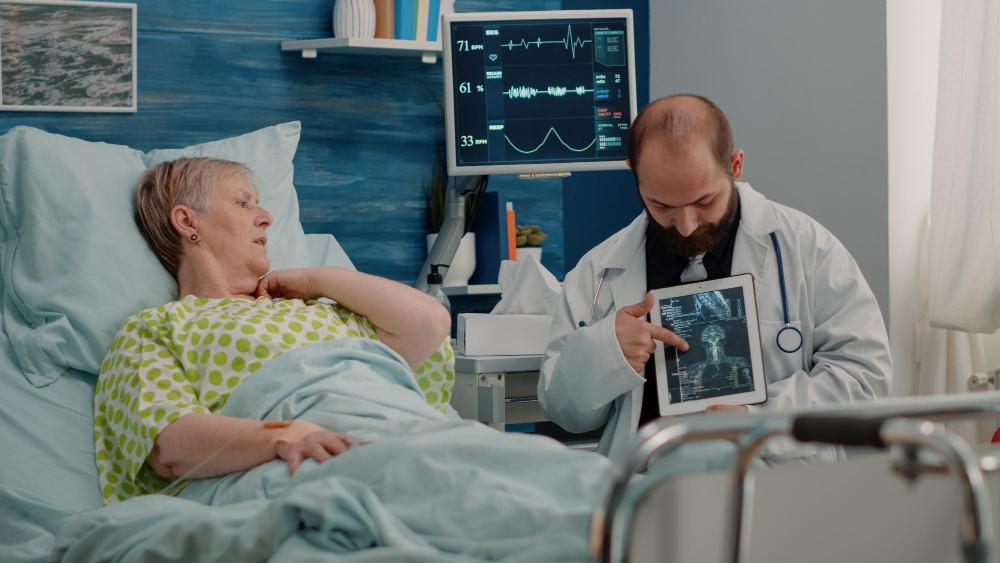
When a patient is wheeled into intensive care, the first thing that happens isn't a diagnosis — it's a plug-in. Wires, cuffs, sensors and lines go on within minutes, because in critical care, the first hour of watching often matters more than the first hour of treating. ICU patient monitoring is the continuous, minute-by-minute tracking of a person's heart, lungs, kidneys, liver and brain, using bedside machines, blood tests and trained eyes working together.
This piece walks through exactly how that tracking happens, organ by organ, so you understand what's behind the beeping screens.
Not every hospitalised patient needs this level of attention — but for someone whose organs are failing or at risk of failing, it's the difference between catching a problem in seconds versus hours. Here's what makes ICU monitoring different from a regular hospital ward, and who actually does it.
ICU patient monitoring means recording a patient's vital signs and organ function continuously, not just once every few hours like on a general ward. Sensors attached to the chest, finger, and arteries send live data to bedside monitors, displaying heart rate, blood pressure, oxygen levels, temperature and breathing rate as constantly updating numbers. Nurses and doctors use this real-time data, combined with lab results, to catch small changes before they become emergencies.
Patients are moved to intensive care when one or more organs are failing, unstable, or at high risk of sudden deterioration — after major surgery, a heart attack, severe infection, trauma, or respiratory failure. A widely cited global analysis found sepsis alone was linked to over 20 million deaths in a single year, underlining why continuous tracking of vital organs is treated as non-negotiable in these cases.
ICU monitoring is a team effort, not a machine running alone. Bedside nurses check readings every few minutes, intensivists (ICU doctors) review trends during rounds, and respiratory therapists focus on breathing support. Studies on ICU workflows note that documenting vital signs is one of the most time-intensive parts of a nurse's shift, because missing a subtle change can mean missing an early sign of organ failure.
The heart and blood vessels are usually the first system checked, because circulation problems can starve every other organ of oxygen within minutes. Here's how that tracking actually happens at the bedside.
Every ICU bed has electrodes stuck to the chest, continuously tracing the heart's electrical activity on a screen — this is the ECG. Alongside it, a blood pressure cuff, or a thin catheter placed into an artery for unstable patients, gives a beat-by-beat pressure reading. Together, these numbers tell the team whether the heart is pumping enough blood to keep organs alive, and whether trouble is developing before it shows in the patient's appearance.
A standard arm cuff only measures blood pressure every few minutes and can be inaccurate on blood pressure support drugs. An arterial line, inserted into the wrist or groin, gives a live, continuous pressure trace and allows repeated blood samples without extra needle pricks — important for patients where even a brief, unnoticed dip in pressure can affect the brain and kidneys.
Nurses are trained to notice patterns, not just single numbers. A rising heart rate combined with falling blood pressure often signals bleeding or worsening shock. An irregular ECG rhythm can point to an electrolyte imbalance. Cool, pale skin alongside a fast pulse suggests poor circulation. None of these signs alone confirms a diagnosis, but together they prompt the team to investigate immediately.
Breathing problems can escalate faster than almost anything else in critical care, so lung monitoring runs in parallel with heart monitoring, often on the very same screen.
A small clip on the fingertip, called a pulse oximeter, shines light through the skin to estimate how much oxygen the blood is carrying. It gives a continuous percentage reading, typically expected to stay above 94–95% in most adults, and it's the fastest way for a nurse to notice that a patient's breathing is quietly failing, sometimes before the patient even feels short of breath.
When a patient can't breathe adequately alone, a ventilator takes over, and the machine itself becomes a monitoring tool. It displays the volume of air moving in and out, the pressure needed for each breath, and the breathing rate. Respiratory therapists adjust settings several times a day, aiming to give just enough support without damaging fragile lungs.
Skin sensors alone don't tell the full story. An arterial blood gas (ABG) test, drawn from an artery, measures oxygen, carbon dioxide and blood acidity with far more precision. It's repeated every few hours in unstable patients, and doctors track the trend across multiple tests to decide whether ventilator settings need to change or a patient is ready to breathe independently.
Organ failure rarely stays confined to one organ. Once circulation or oxygen levels drop, the kidneys and liver are often the next to show strain, so ICU teams track them closely even when a patient's main problem seems to be elsewhere.
A thin catheter measures exactly how much urine a patient produces every hour — a simple number that's one of the most sensitive early indicators of kidney health in the ICU. A drop below roughly 0.5 ml per kilogram of body weight per hour, sustained over several hours, is treated as an early warning of kidney injury, prompting quicker changes to fluids or medications.
Daily blood draws check markers like creatinine and urea for kidney function, and liver enzymes plus bilirubin for liver stress. These are compared against the patient's own admission baseline, since a rising trend over 24–48 hours matters more than any single value. Scoring systems used across ICUs worldwide combine several such results into one daily severity score.
Every millilitre of fluid a patient receives — through IV drips, feeding tubes or medications — and every millilitre they lose, through urine, drains or sweat, is logged on a fluid balance chart. Too much fluid can flood the lungs and stress the heart; too little can starve the kidneys. Nurses total this chart at least once per shift, and it directly shapes decisions about medication dosing and dialysis.
|
Vital Organ |
Key Parameter Tracked |
Monitoring Tool |
Typical Target Range (Adults) |
|
Heart |
Heart rate, rhythm |
ECG monitor |
60–100 beats per minute |
|
Blood vessels |
Blood pressure |
Arterial line / cuff |
Mean arterial pressure 65+ mmHg |
|
Lungs |
Oxygen saturation |
Pulse oximeter |
94–98% |
|
Kidneys |
Urine output |
Urinary catheter |
Above 0.5 ml/kg/hour |
|
Brain |
Consciousness level |
Glasgow Coma Scale |
15/15 (fully alert) |
Because a patient's neurological status can't be read off a single sensor the way a heart rate can, checking the brain relies more heavily on hands-on assessment, repeated on a strict schedule.
The Glasgow Coma Scale (GCS) is a standardised check where nurses score a patient's eye opening, verbal response and physical movement, adding up to a score out of 15. A score of 15 means fully alert; anything below 8 signals a severely impaired level of consciousness. A falling score is treated as urgently as a dropping blood pressure.
In patients with severe head injuries, strokes, or brain swelling, a small sensor may be placed inside the skull to measure intracranial pressure continuously. Sustained high pressure can cut off blood flow to brain tissue, so this reading guides decisions on medications, positioning, and sometimes emergency surgery, often before any external symptom appears.
Many ICU patients are kept sedated to tolerate ventilators and reduce distress, but too much sedation hides neurological problems and delays recovery. Teams use structured sedation scales, checked several times daily, to keep patients at the lightest level of sedation that's still safe and comfortable. Many ICUs also perform a daily "sedation pause" to briefly check underlying alertness and organ status without the sedative masking it.
Relevant Blog : How to Prepare Emotionally for a Loved Ones ICU Journey
Q1. How long does a patient typically stay on continuous ICU monitoring?
It depends on how quickly the underlying problem stabilises — from a day or two after routine major surgery to several weeks for severe multi-organ failure.
Q2. Why do ICU patients get connected to so many machines at once?
Because organs rarely fail one at a time in critical illness. Heart, lung, kidney and brain function are interconnected, so tracking them together helps catch a problem in one organ before it drags others down.
Q3. Can family members understand what the monitor numbers mean?
Broadly, yes. Heart rate, blood pressure, oxygen percentage and temperature are usually clearly labelled, and ICU teams are happy to explain what a specific number means during visiting hours.
Q4. What happens when a monitor alarm goes off?
An alarm doesn't always mean an emergency — it can trigger from a loose sensor or patient movement. The bedside nurse checks the reading immediately and escalates only if it reflects a real change.