


Page Under Maintenance
This page is currently under maintenance.
Please communicate at the hospital help desk for assistance.
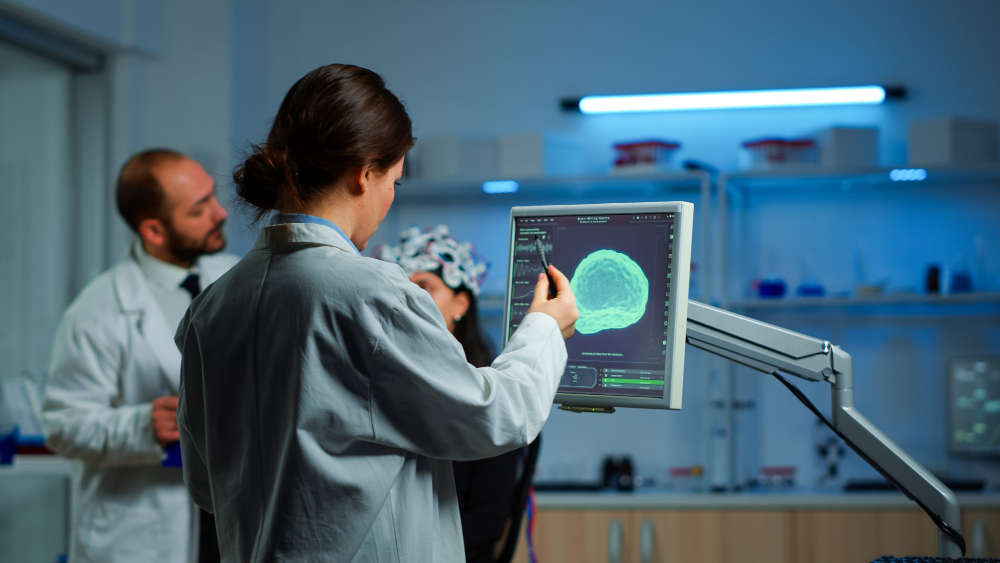
The field of neurosurgery, which specializes in the diagnosis and treatment of disorders impacting the brain, spine, and nervous system, has undergone significant evolution over the years. Traditionally, neurosurgery involved large incisions, substantial tissue manipulation, and prolonged recovery times. Nonetheless, due to technological progress and enhanced surgical methods, the approach to complex neurological disorders has been revolutionized by minimally invasive neurosurgery (MIN).
Minimally invasive neurosurgery employs smaller incisions, specialized tools, and cutting-edge imaging technologies to access the surgical site precisely and with minimal harm to surrounding tissues. This method has transformed results, resulting in quicker recuperation, fewer complications, and enhanced patient experiences.
Minimally invasive neurosurgery (MIN) encompasses a range of surgical methods aimed at carrying out intricate brain or spine operations via small incisions, typically under one inch in length. Surgeons employ specialized instruments like endoscopes, microscopes, and navigation systems to access the affected region with remarkable precision, rather than making large openings in the skull or spine.
These procedures frequently depend on real-time imaging technologies such as MRI, CT scans, or neuronavigation systems that assist surgeons in accurately locating the abnormality while reducing damage to healthy brain or spinal tissues.
Minimally invasive (MIN) techniques have been shown to be effective for a variety of neurological conditions. Some of the most frequently treated issues include:
Brain Tumors: Both non-cancerous and cancerous tumors can be excised utilizing endoscopic or keyhole approaches, which leads to shorter recovery periods and fewer complications.
Spinal Disorders: Issues such as herniated discs, spinal stenosis, and degenerative spine diseases are successfully treated with minimally invasive spine surgery (MISS).
Hydrocephalus: Endoscopic third ventriculostomy (ETV) provides a viable alternative to conventional shunt insertion.
Aneurysms and Vascular Malformations: Certain types of aneurysms can be treated through clipping or coiling utilizing endovascular methods.
Epilepsy: Laser ablation and stereotactic procedures can accurately target regions of the brain responsible for seizures.
Parkinson’s Disease: Deep Brain Stimulation (DBS), conducted with minimally invasive techniques, aids in managing motor symptoms.
Chiari Malformation and Skull Base Lesions: These conditions can frequently be addressed using endoscopic or keyhole techniques, which reduce the need for significant brain retraction.
The move towards minimally invasive methods has provided notable benefits for both patients and surgeons. Below are the primary advantages that make minimally invasive neurosurgery a favored option whenever appropriate.
A prominent advantage of minimally invasive neurosurgery is the utilization of small incisions, often only a few millimeters in size. This leads to less conspicuous scarring and lowers the risk of wound infections and postoperative discomfort.
Conventional surgeries frequently necessitate the disruption or removal of healthy tissues to reach the area of interest. Conversely, MIN techniques aim to reduce collateral damage by utilizing natural anatomical routes or employing real-time imaging for enhanced accuracy.
Due to minimal tissue damage, patients tend to have shorter hospital admissions—often lasting just a few days rather than weeks—and can return to their normal activities more swiftly. This is especially advantageous for working individuals and elderly patients.
Smaller incisions and lower blood loss considerably lessen the chances of complications such as infections, cerebrospinal fluid leaks, or postoperative neurological issues. This results in increased safety and better outcomes.
Individuals who undergo minimally invasive surgeries generally feel less pain after the procedure, which decreases their reliance on strong pain relief medications and facilitates a quicker recovery.
Utilizing high-definition cameras, advanced microscopes, and navigation technologies, surgeons obtain magnified and instantaneous views of the surgical area. This level of accuracy enables precise excision of tumors or lesions while safeguarding essential structures.
Smaller incisions and faster recovery times often result in superior cosmetic outcomes, which can positively affect patients’ mental and emotional health post-surgery.
While minimally invasive neurosurgery has many benefits, it also has its limitations. It is important to recognize that although MIN provides a less invasive option, it may not be appropriate for every patient or all types of neurological conditions.
Certain large or deeply situated brain tumors, complicated vascular anomalies, or significant spinal deformities may necessitate conventional open surgery. Surgeons need to evaluate whether a minimally invasive technique can achieve equivalent results safely.
Even though endoscopic and microscopic instruments improve visualization, surgeons may face challenges accessing broader regions, particularly in complex situations involving several structures or widespread conditions.
Engaging in minimally invasive neurosurgery necessitates specialized training, precision, and extensive experience. Surgeons are required to become proficient with advanced instruments and technologies to guarantee patient safety and achieve the best possible results.
Minimally invasive neurosurgery is heavily dependent on imaging technologies, neuronavigation, and specialized equipment. Technical malfunctions or lack of available equipment in certain medical facilities can hinder its implementation.
Although long-term recovery expenses may be reduced, the initial costs associated with minimally invasive neurosurgery can be higher due to the need for specialized tools and operating room technology. However, these expenses are frequently balanced by shorter hospital stays and quicker rehabilitation.
The progression of neurosurgery is increasingly linked to advancements in technology. The forthcoming era of minimally invasive neurosurgery is anticipated to incorporate robotic-assisted systems, augmented reality (AR), and artificial intelligence (AI) to enhance precision and safety.
These advancements will persist in making neurosurgery safer, swifter, and more effective, further enhancing outcomes and the quality of life for patients globally.
Every patient has a distinct condition, and the choice to use a minimally invasive method hinges on several factors, including:
A multidisciplinary team, consisting of neurosurgeons, neurologists, anesthesiologists, and rehabilitation specialists, assesses each situation to recommend the safest and most effective treatment plan.
Minimally invasive neurosurgery marks a revolutionary change in the treatment of brain and spine disorders. It provides patients with the benefits of reduced discomfort, smaller scars, faster recovery, and enhanced outcomes, without sacrificing surgical accuracy or effectiveness. Nonetheless, it is vital to recognize that this approach is not suitable for everyone; the decision should be tailored based on the individual’s condition and the physician's expertise.
How Neurosurgery is Advancing in Treating Brain Tumors
As technology progresses, the limits of what is achievable in neurosurgery are expanding quickly. From robotic-assisted operations to AI-enhanced diagnostics, there are thrilling prospects for safer and more effective care for brain and spine issues.
At Jaslok Hospital, our Neurosurgery Department integrates state-of-the-art technology with top neurosurgery specialists to achieve optimal results for our patients. Our exceptionally trained neurosurgeons focus on minimally invasive surgical techniques for the brain and spine, assuring accuracy, safety, and quicker recovery. Equipped with advanced neuro-navigation systems, endoscopic suites, and customized rehabilitation programs, Jaslok Hospital is recognized as one of the premier centers for neurosurgical excellence in India